
Higher Order Thinking in the Age of AI: How Adaptive Tutoring Platforms Are Cultivating Critical Minds
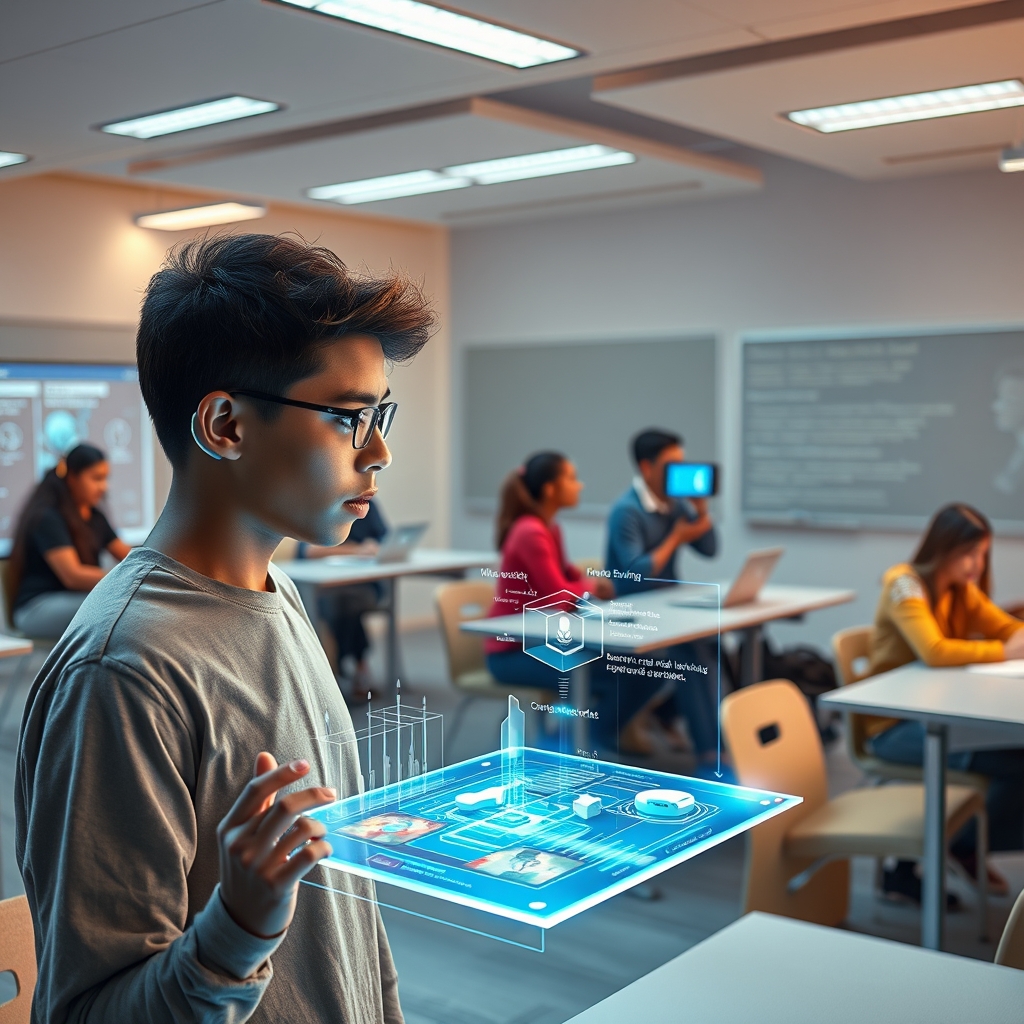
In an era where information is abundant and easily accessible, the true challenge for educators is no longer just imparting knowledge but fostering the skills needed to analyze, evaluate, and create. Higher order thinking skills (HOTS)—such as critical thinking, problem-solving, and creativity—have become the cornerstone of modern education. As artificial intelligence continues to reshape learning environments, adaptive tutoring platforms are emerging as powerful tools to cultivate these essential skills, bridging the gap between rote memorization and deep, meaningful learning.
The Shift from Knowledge Acquisition to Skill Development
Traditional education systems have long prioritized the accumulation of facts and figures, often at the expense of deeper cognitive development. However, the rise of AI-driven educational technology is challenging this paradigm by shifting the focus toward skill mastery. Adaptive tutoring platforms, powered by machine learning algorithms, are designed to assess a learner’s current abilities and tailor instruction to push them toward more complex cognitive tasks. These platforms don’t just deliver content; they engage students in activities that require analysis, synthesis, and evaluation—key components of higher order thinking.
For example, instead of simply answering multiple-choice questions, students might be presented with real-world scenarios that demand problem-solving or creative solutions. AI-driven platforms can analyze their responses, identify patterns in their thinking, and provide personalized feedback to guide them toward more sophisticated reasoning. This dynamic interaction ensures that learners are not just passive recipients of information but active participants in their cognitive growth.
Personalization: The Key to Unlocking Higher Order Thinking
One of the most significant advantages of adaptive tutoring platforms is their ability to personalize learning experiences. Traditional classrooms often struggle to address the diverse needs of students, leading to gaps in understanding and engagement. AI-powered systems, however, can adapt in real-time to a learner’s strengths, weaknesses, and learning style, ensuring that each student is challenged at the appropriate level.
Personalized learning systems use data from student interactions to identify areas where higher order thinking can be developed. For instance, if a student excels in factual recall but struggles with application, the platform might introduce more open-ended questions or project-based tasks to stretch their cognitive abilities. This targeted approach not only enhances learning outcomes but also builds confidence, as students see tangible progress in their ability to think critically and creatively.
The Role of Gamification in Engaging Learners
Gamified learning environments have gained traction as a way to make education more engaging and interactive. By incorporating elements such as points, badges, leaderboards, and challenges, these platforms tap into the natural human desire for achievement and competition. However, gamification is not just about making learning fun—it’s about designing experiences that inherently require higher order thinking.
In a gamified adaptive tutoring platform, students might be tasked with solving complex puzzles, designing solutions to real-world problems, or collaborating with peers in virtual environments. These activities demand creativity, strategic planning, and critical analysis, all of which are hallmarks of higher order thinking. Moreover, the immediate feedback provided by gamified systems helps learners refine their approaches, fostering a growth mindset and resilience in the face of challenges.
Blending Technology with Pedagogy: The Future of Adaptive Learning
While adaptive tutoring platforms hold immense promise, their effectiveness depends on how well they integrate with established pedagogical principles. Technology alone cannot replace the nuanced understanding of human learning that educators bring to the table. Instead, the most successful implementations of AI in education are those that blend technology with proven teaching strategies, such as project-based learning and interactive pedagogies.
For example, an adaptive platform might use predictive learning analytics to identify a student’s learning gaps and then recommend a project-based activity to address those gaps. The student could work on a collaborative project that requires research, analysis, and presentation—skills that align with higher order thinking. The platform could provide scaffolding and resources along the way, ensuring that the student remains engaged and supported throughout the process.
Preparing Students for the Workforce of Tomorrow
The demand for higher order thinking skills extends beyond the classroom. In today’s rapidly evolving job market, employers are increasingly seeking candidates who can think critically, adapt to new challenges, and innovate. Adaptive tutoring platforms are uniquely positioned to prepare students for this reality by simulating real-world scenarios and providing opportunities to develop and refine these skills.
For instance, microlearning modules integrated into adaptive platforms can deliver bite-sized lessons on topics like data analysis, creative problem-solving, or ethical decision-making. These modules can be tailored to a student’s career aspirations, ensuring that the skills they develop are relevant to their future roles. Additionally, digital microcredentials earned through these platforms can serve as tangible proof of a student’s proficiency in higher order thinking, making them more competitive in the job market.
As artificial intelligence continues to advance, the potential for adaptive tutoring platforms to transform education grows exponentially. These systems are not just tools for delivering content; they are catalysts for cognitive development, pushing students to move beyond memorization and embrace the complexities of higher order thinking. By personalizing learning experiences, incorporating gamification, and blending technology with pedagogy, adaptive platforms are equipping learners with the skills they need to thrive in an increasingly complex world. The future of education lies not in what students know, but in how well they can think, adapt, and create—and AI is playing a pivotal role in making that future a reality.



