
Revolutionizing Education: The Power of Blended Learning Models in the Digital Era
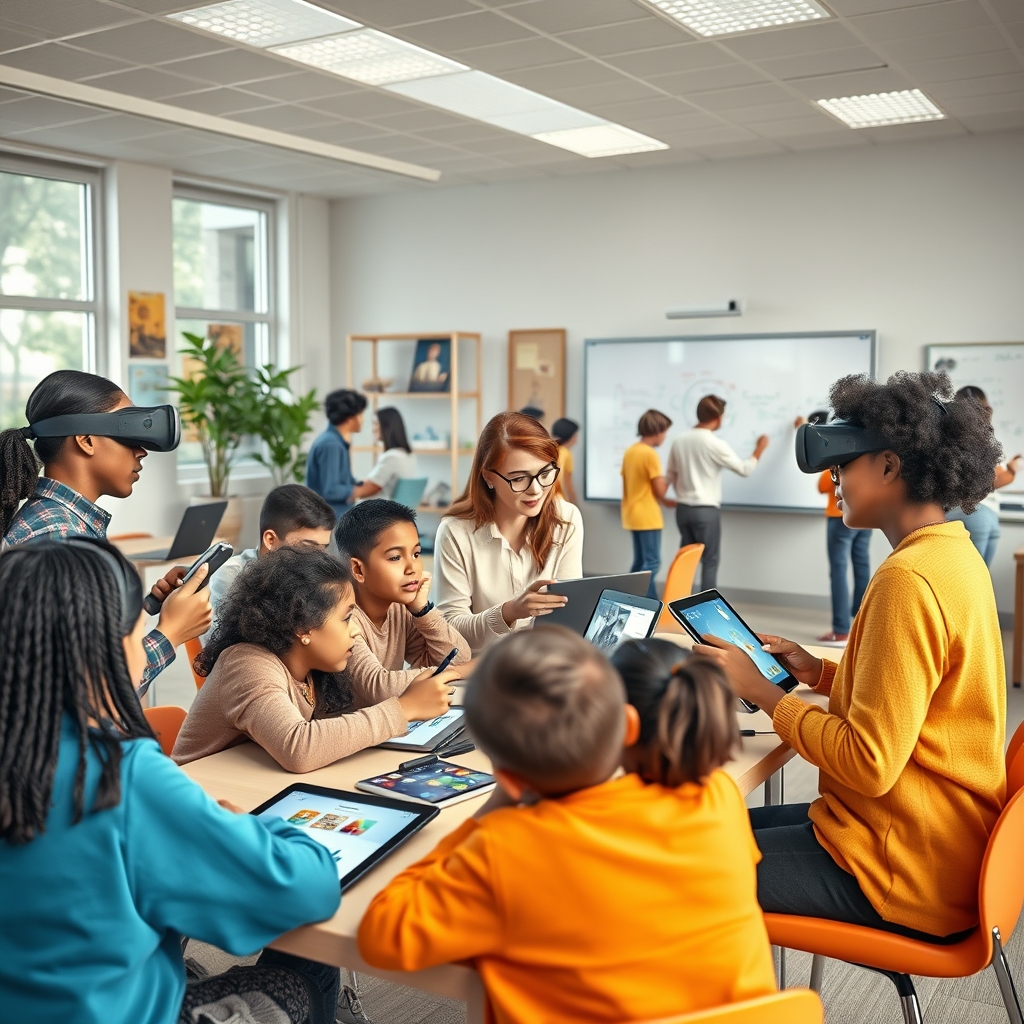
Education is undergoing a profound transformation, driven by the rapid advancement of technology and the evolving needs of learners. Among the most impactful innovations is the rise of blended learning models, which seamlessly integrate traditional classroom instruction with digital tools to create a dynamic, flexible, and personalized learning experience. This approach not only enhances engagement but also bridges gaps in accessibility, making education more inclusive and adaptable to diverse learning styles.
The Evolution of Blended Learning
Blended learning is not a new concept, but its implementation has evolved significantly with the advent of educational technology integration. Initially, it was seen as a way to supplement face-to-face instruction with online resources. Today, it encompasses a spectrum of models, from flipped classrooms to rotational and flex models, each tailored to meet specific educational goals. The shift toward blended learning has been accelerated by the global pandemic, which forced institutions to rethink how education is delivered. What emerged was a realization that technology could enhance, rather than replace, the human element of teaching.
Flipped Classrooms: A Paradigm Shift
One of the most popular blended learning models is the flipped classroom, where students engage with instructional content at home—often through videos, interactive modules, or readings—and apply what they’ve learned in the classroom through discussions, projects, or collaborative activities. This model flips the traditional structure of homework and in-class learning, allowing educators to focus on higher-order thinking skills such as analysis, evaluation, and creation. By leveraging digital platforms, teachers can provide personalized feedback and support, ensuring that no student is left behind.
Microlearning: Bite-Sized Education for the Modern Learner
In an era of short attention spans and busy schedules, microlearning has emerged as a powerful tool within blended learning environments. This approach breaks down complex topics into small, digestible chunks, often delivered through mobile apps, interactive quizzes, or short videos. Microlearning is particularly effective for workforce upskilling, as it allows professionals to acquire new skills without disrupting their daily routines. When integrated into blended learning models, it reinforces concepts through repetition and spaced learning, improving retention and application.
The Role of Artificial Intelligence in Blended Learning
The integration of artificial intelligence in education has further elevated the potential of blended learning. AI-powered tools, such as adaptive tutoring platforms, analyze student performance in real-time and adjust the difficulty of tasks or recommend additional resources based on individual needs. These systems create a personalized learning experience that caters to each student’s pace and learning style. For example, an AI-driven platform might identify a student struggling with algebraic concepts and provide targeted exercises or video tutorials to reinforce understanding. This level of customization was once unimaginable in traditional classrooms but is now a reality thanks to advancements in predictive learning analytics.
Enhancing Inclusivity Through Technology
Blended learning models also play a crucial role in promoting inclusive education. Digital tools can accommodate students with disabilities by offering features like text-to-speech, closed captioning, and customizable interfaces. Additionally, blended learning provides opportunities for students in remote or underserved areas to access high-quality education. By combining online and offline resources, educators can create a more equitable learning environment where every student has the chance to succeed. This is particularly important in workforce development, where upskilling and reskilling programs must be accessible to all, regardless of location or background.
The Future of Blended Learning: Trends to Watch
As technology continues to evolve, so too will blended learning models. One emerging trend is the use of immersive learning environments, such as virtual and augmented reality, to create engaging, hands-on experiences. Imagine a history class where students can virtually walk through ancient Rome or a science lesson where they conduct experiments in a simulated lab. These technologies have the potential to make learning more interactive and memorable, fostering deeper understanding and retention.
Another exciting development is the rise of gamified learning environments, which use game design elements to motivate and engage students. By incorporating rewards, challenges, and leaderboards, educators can make learning feel more like play, increasing participation and enthusiasm. Gamification is particularly effective in teaching technology literacy, as it encourages students to explore digital tools in a fun and interactive way.
Project-Based Learning: Bridging Theory and Practice
Blended learning also lends itself well to project-based learning (PBL), an instructional approach where students gain knowledge and skills by working on real-world projects. By combining online research, collaboration tools, and in-person guidance, PBL prepares students for the demands of the modern workforce. It encourages critical thinking, creativity, and problem-solving—skills that are highly valued in today’s job market. Digital microcredentials, such as badges or certificates, can further validate these skills, providing students with tangible proof of their accomplishments.
The journey toward a more dynamic and inclusive education system is well underway, and blended learning models are at the forefront of this revolution. By harnessing the power of technology, educators can create learning experiences that are not only effective but also engaging and accessible to all. The key lies in striking the right balance between digital innovation and the irreplaceable human touch of teaching. As we look to the future, one thing is clear: the possibilities for transforming education are limitless, and blended learning will continue to play a pivotal role in shaping how we learn, teach, and grow.



