Beyond the Classroom Walls: How Immersive Learning Environments Are Redefining Education
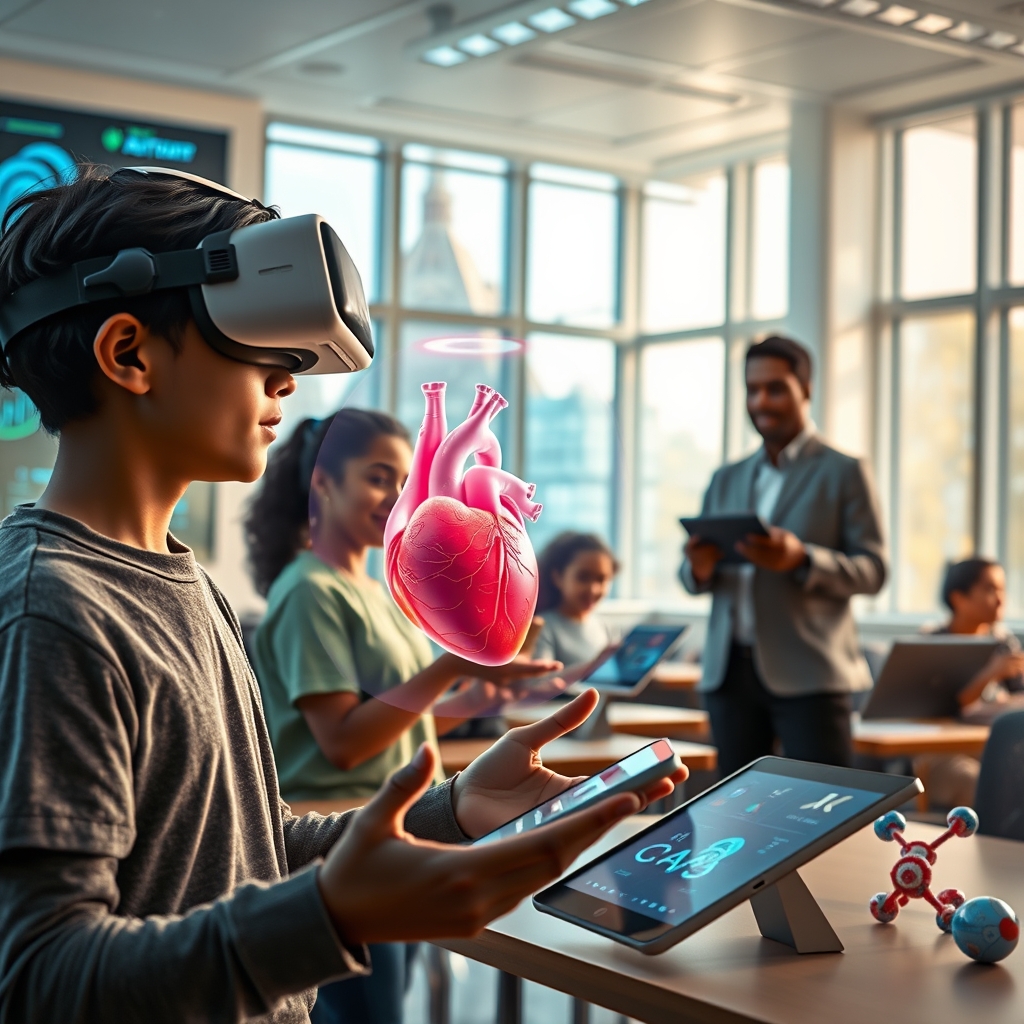
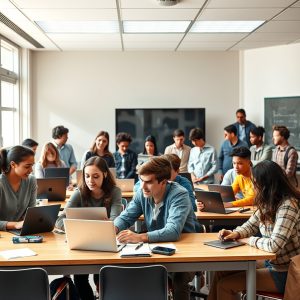
The traditional classroom, with its rows of desks and chalkboards, has long been the cornerstone of education. Yet, as technology evolves, so too does the landscape of learning. Immersive learning environments are emerging as a transformative force, breaking down the physical and cognitive barriers that have historically limited educational experiences. By leveraging virtual reality (VR), augmented reality (AR), and mixed reality (MR), these environments are not just enhancing education—they are redefining it.
The Rise of Immersive Learning
Immersive learning environments transport students beyond the confines of textbooks and lectures, placing them in dynamic, interactive spaces where learning becomes an experience rather than a task. Imagine a history lesson where students can walk through ancient Rome, witnessing the construction of the Colosseum firsthand, or a biology class where they can shrink down to explore the inner workings of a human cell. These are not scenes from a sci-fi novel; they are the realities being created by immersive technologies today.
Research has shown that immersive learning significantly boosts engagement and retention. A study by PwC found that learners in VR environments were up to four times more focused than their e-learning peers and 275% more confident in applying the skills they learned. This is because immersive learning taps into the brain’s natural ability to remember experiences more vividly than abstract concepts. When students are emotionally and cognitively engaged, learning becomes not just effective but unforgettable.
Bridging Gaps in Inclusive Education
One of the most profound impacts of immersive learning environments is their potential to make education more inclusive. Traditional classrooms often struggle to accommodate students with diverse learning needs, whether due to physical disabilities, cognitive differences, or language barriers. Immersive technologies can level the playing field by providing customizable experiences that adapt to individual learners.
For example, students with autism spectrum disorder (ASD) may find social interactions challenging in a typical classroom setting. VR can simulate social scenarios in a controlled environment, allowing these students to practice and develop social skills at their own pace. Similarly, students with mobility impairments can explore virtual field trips that would otherwise be inaccessible. By removing physical and sensory barriers, immersive learning environments create opportunities for all students to thrive.
The Role of Gamified Learning in Immersive Environments
Gamification is another powerful tool within immersive learning environments, transforming education into an engaging, interactive experience. By incorporating game design elements such as points, badges, leaderboards, and challenges, educators can motivate students to actively participate in their learning journey. This approach is particularly effective in fostering higher-order thinking skills, such as problem-solving, critical analysis, and creativity.
Consider a gamified VR chemistry lab where students must complete experiments to unlock the next level of a story. The stakes feel real, the challenges are immediate, and the rewards are tangible. This not only makes learning fun but also encourages students to persist through difficulties, developing resilience and a growth mindset. Gamified learning environments also provide instant feedback, allowing students to learn from their mistakes and iterate in real time—a far cry from the delayed feedback of traditional assessments.
Predictive Learning Analytics: Personalizing the Immersive Experience
Immersive learning environments are not just about flashy visuals and interactive experiences; they are also deeply rooted in data. Predictive learning analytics play a crucial role in tailoring these environments to meet the unique needs of each student. By tracking interactions, behaviors, and performance within the virtual space, educators can gain insights into how students learn best and where they may be struggling.
For instance, if a student repeatedly struggles with a particular concept in a VR math game, the system can adjust the difficulty level or provide additional hints and resources. This adaptive approach ensures that students are neither bored by material that is too easy nor overwhelmed by content that is too challenging. Over time, predictive analytics can help educators identify patterns and trends, enabling them to refine curricula and teaching strategies to better support student success.
Challenges and Considerations
While the potential of immersive learning environments is vast, their implementation is not without challenges. Cost is a significant barrier, as high-quality VR and AR equipment can be expensive, and not all schools or institutions have the budget to invest in these technologies. Additionally, there is a learning curve for both educators and students, who may require training to effectively use and navigate these new tools.
Another consideration is the digital divide. As immersive learning becomes more prevalent, there is a risk of widening the gap between students who have access to these technologies and those who do not. Ensuring equitable access to immersive learning environments will be critical in preventing further disparities in education. This may require partnerships between schools, governments, and private companies to provide resources and infrastructure to underserved communities.
The Future of Workforce Development
Immersive learning environments are not just transforming K-12 and higher education; they are also reshaping workforce development. As industries evolve and new skills are demanded, traditional training methods often fall short in preparing employees for the challenges of the modern workplace. Immersive technologies offer a solution by providing realistic, hands-on training experiences that bridge the gap between theory and practice.
For example, medical students can practice surgical procedures in a VR operating room, while engineers can simulate complex machinery repairs. These experiences allow learners to develop practical skills in a safe, controlled environment before applying them in real-world scenarios. Furthermore, immersive learning can facilitate workforce upskilling, enabling employees to acquire new competencies without the need for lengthy and costly traditional training programs.
As we stand on the brink of a new era in education, immersive learning environments offer a glimpse into a future where learning is limitless. They have the power to make education more engaging, inclusive, and effective, breaking down the walls of the traditional classroom and opening up a world of possibilities. The question is no longer whether immersive learning will become a staple of education, but how quickly we can embrace and integrate these technologies to unlock the full potential of every learner. The journey has just begun, and the destination is as exciting as it is transformative.