The Evolution of Flipped Classrooms: How AI and Microlearning Are Redefining Knowledge Management in Education
The traditional classroom model, where instructors deliver lectures and students passively absorb information, is undergoing a profound transformation. The rise of flipped classrooms has shifted the dynamics of learning, placing students at the center of their educational journey. This pedagogical approach, combined with advancements in artificial intelligence (AI) and microlearning, is not only enhancing knowledge management but also fostering deeper engagement and higher-order thinking skills. As educational institutions increasingly adopt these innovations, the question arises: How are these technologies reshaping the way we learn, teach, and retain knowledge?
The Flipped Classroom: A Paradigm Shift in Learning
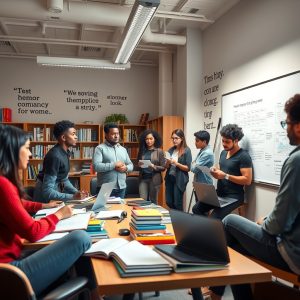
The flipped classroom model inverts the traditional learning structure. Instead of introducing new concepts in the classroom and assigning practice work as homework, students engage with instructional content—such as videos, readings, or interactive modules—before class. Classroom time is then dedicated to active learning, discussions, problem-solving, and collaborative projects. This approach not only maximizes face-to-face interaction but also allows educators to provide personalized support where it’s needed most.
Research has shown that flipped classrooms can significantly improve student performance, particularly in subjects requiring critical thinking and application. For instance, a study published in the Journal of Chemical Education found that students in flipped chemistry courses outperformed their peers in traditional settings by an average of 12%. The reason? Students arrive in class prepared, enabling instructors to focus on clarifying doubts, facilitating discussions, and guiding hands-on activities. However, the success of this model hinges on one critical factor: effective knowledge management.
The Role of AI in Enhancing Flipped Learning
Artificial intelligence is playing a pivotal role in optimizing flipped classrooms by personalizing the learning experience. Adaptive tutoring platforms, powered by AI, analyze student performance in real-time and tailor content to address individual strengths and weaknesses. For example, platforms like Khan Academy and Duolingo use AI-driven algorithms to recommend specific lessons or exercises based on a student’s progress. This level of personalization ensures that learners are neither overwhelmed nor underchallenged, fostering a more inclusive and equitable educational environment.
Moreover, AI can automate the creation and curation of instructional materials, reducing the burden on educators. Tools like natural language processing (NLP) can generate summaries of complex topics, while machine learning algorithms can identify gaps in a student’s understanding and suggest supplementary resources. This not only streamlines the preparation process for flipped classrooms but also ensures that the content remains relevant and up-to-date. By leveraging AI, educators can focus less on content delivery and more on mentoring, facilitating discussions, and nurturing higher-order thinking skills.
Microlearning: Bite-Sized Knowledge for Maximum Retention
In an era where attention spans are shrinking and information overload is a constant challenge, microlearning has emerged as a powerful tool for knowledge retention. Microlearning breaks down complex topics into small, digestible chunks—typically lasting between 2 to 10 minutes—that can be consumed on-demand. This approach aligns perfectly with the flipped classroom model, as it allows students to engage with pre-class materials in a way that fits their schedules and learning preferences.
The benefits of microlearning extend beyond convenience. Cognitive science research suggests that spaced repetition and bite-sized learning enhance memory retention. A study conducted by the Journal of Applied Psychology found that microlearning can improve knowledge retention by up to 20% compared to traditional long-form content. When combined with AI, microlearning becomes even more effective. AI-driven platforms can deliver personalized micro-lessons based on a student’s progress, ensuring that they revisit and reinforce concepts at the optimal time for retention.
Integrating Microlearning and AI into Flipped Classrooms
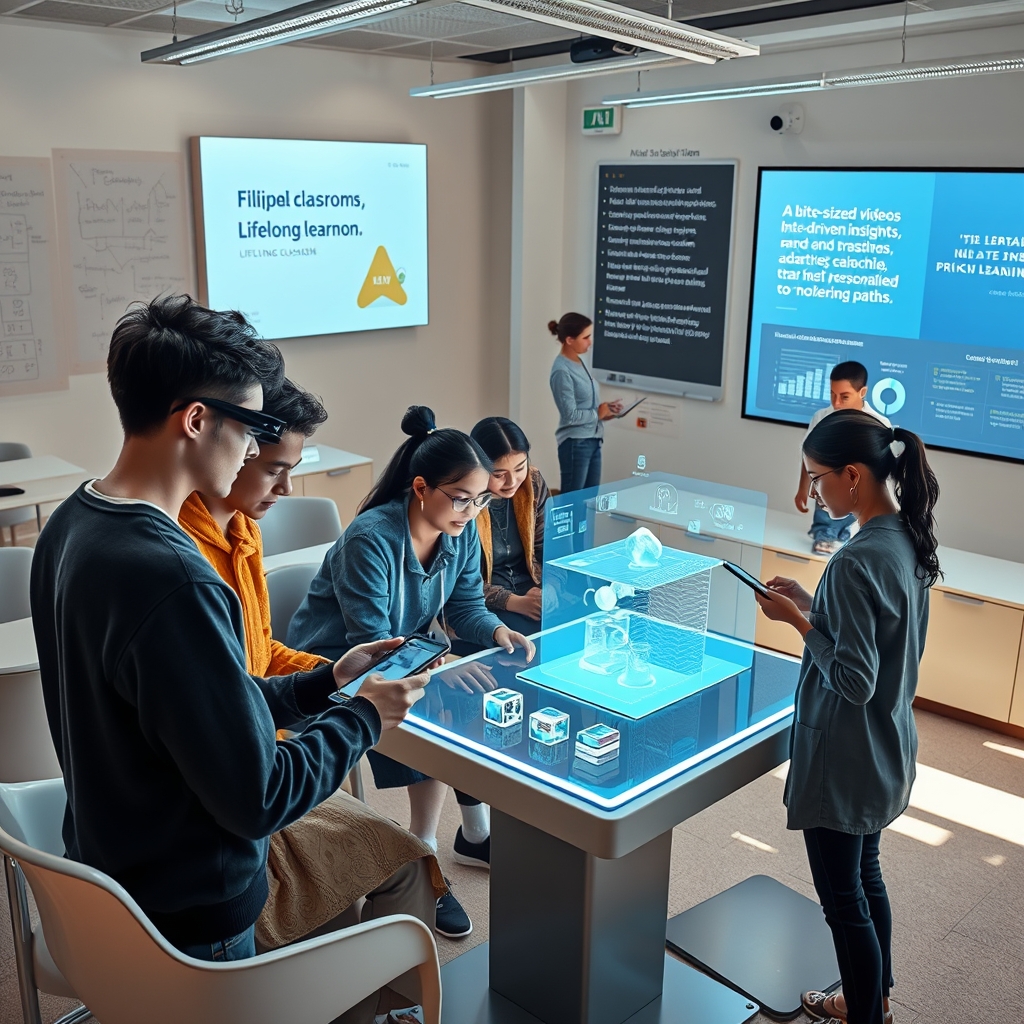
The synergy between microlearning and AI is transforming the flipped classroom into a dynamic, responsive learning environment. For instance, an AI-powered platform can analyze a student’s interaction with a micro-lesson—such as the time spent on a video, the number of attempts on a quiz, or the questions asked—and adjust subsequent content accordingly. This adaptive approach ensures that students receive the right level of challenge and support, keeping them engaged and motivated.
Educators can also use AI to track student progress across microlearning modules, identifying patterns and trends that may indicate areas of difficulty. This data-driven insight allows instructors to intervene proactively, offering targeted support before a student falls behind. Additionally, AI can facilitate collaborative learning by grouping students with complementary strengths and weaknesses, fostering peer-to-peer knowledge sharing and problem-solving.
The Future of Knowledge Management in Education
As flipped classrooms, AI, and microlearning continue to evolve, the future of knowledge management in education looks increasingly dynamic and student-centered. The integration of these technologies is not just about delivering content more efficiently; it’s about creating a learning ecosystem that adapts to the needs of each student, fosters critical thinking, and prepares learners for the challenges of the 21st century.
However, the adoption of these innovations is not without challenges. Educators must be trained to effectively integrate AI and microlearning into their teaching practices, and institutions must invest in the necessary infrastructure and resources. There are also ethical considerations, such as data privacy and the potential for algorithmic bias, that must be addressed to ensure that these technologies are used responsibly and equitably.
The transformation of education through flipped classrooms, AI, and microlearning is not a distant vision—it is happening now. As these tools become more sophisticated and accessible, they have the potential to democratize education, making high-quality learning experiences available to students regardless of their background or location. The key to unlocking this potential lies in striking a balance between technological innovation and human-centered pedagogy, ensuring that the focus remains on nurturing curious, capable, and compassionate learners. In this evolving landscape, the role of educators is not diminished but reimagined, shifting from knowledge transmitters to facilitators of discovery, collaboration, and lifelong learning.