
Unlocking Potential: How Gamified Learning Environments Are Transforming Education for the Digital Age
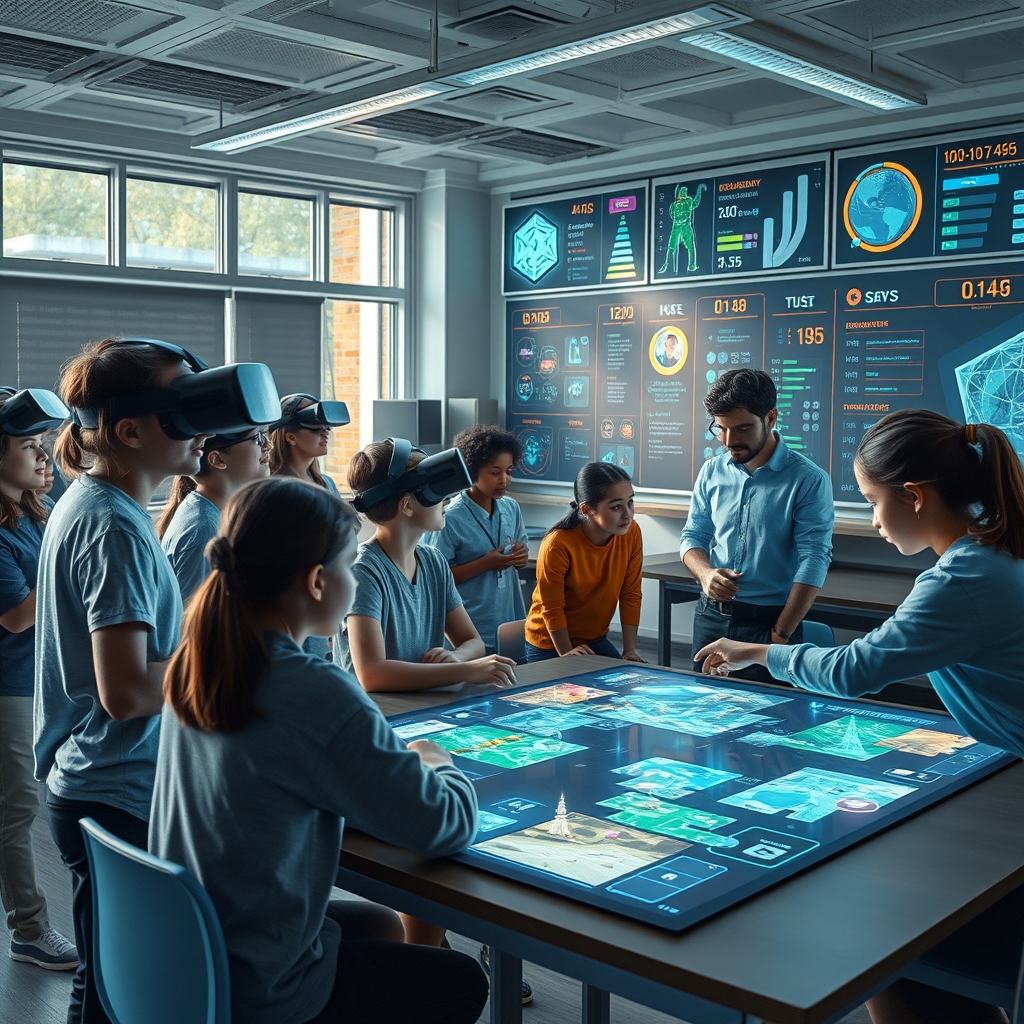
Education is undergoing a seismic shift, moving away from the one-size-fits-all model that has dominated classrooms for centuries. At the heart of this transformation is the rise of gamified learning environments, a dynamic approach that leverages the principles of game design to make education more engaging, interactive, and effective. By integrating elements like points, badges, leaderboards, and narrative-driven challenges, educators are not only capturing students’ attention but also fostering deeper learning and retention. This evolution is not just about making learning fun—it’s about reimagining how knowledge is acquired, applied, and mastered in the 21st century.
The Psychology Behind Gamification
Gamification taps into fundamental psychological motivators that drive human behavior. At its core, it leverages intrinsic and extrinsic motivation to create a learning experience that feels less like a chore and more like an adventure. Intrinsic motivation—doing something because it is inherently interesting or enjoyable—is nurtured through elements like autonomy, mastery, and purpose. For example, when students can choose their own learning paths within a gamified platform, they feel a sense of ownership over their education. Extrinsic motivation, on the other hand, comes from external rewards such as points, badges, or recognition on a leaderboard. These rewards provide immediate feedback and a sense of accomplishment, which can be particularly powerful for students who struggle with traditional academic motivation.
Research in cognitive science also supports the effectiveness of gamification. The concept of flow, introduced by psychologist Mihaly Csikszentmihalyi, describes a state of deep engagement where individuals are fully immersed in an activity. Gamified learning environments are designed to achieve this state by balancing challenge and skill—tasks are neither too easy nor too difficult, keeping students in a zone where they are motivated to persist and improve. This balance is crucial for developing higher-order thinking skills, such as problem-solving, critical analysis, and creativity, which are essential for success in an increasingly complex world.
From Theory to Practice: Gamification in Action
The application of gamification in education is as diverse as the subjects it aims to teach. In STEM (Science, Technology, Engineering, and Mathematics) fields, platforms like Kahoot! and Duolingo have become household names, turning quizzes and language lessons into competitive, interactive experiences. For instance, Kahoot! allows teachers to create game-based quizzes where students compete in real-time, answering questions on topics ranging from biology to history. The immediate feedback and friendly competition not only reinforce learning but also create a sense of community in the classroom.
Beyond quizzes, gamification is also being used to teach complex concepts through project-based learning (PBL). For example, the platform Classcraft transforms the entire classroom into a role-playing game, where students take on different roles (e.g., healers, mages, warriors) and work together to complete quests. These quests are tied to curriculum goals, such as writing an essay or solving a math problem, but the gamified structure makes the process more engaging. Students earn points for collaboration, creativity, and perseverance, which can be redeemed for real-world rewards like homework passes or extra recess time. This approach not only makes learning more enjoyable but also teaches valuable soft skills like teamwork and resilience.
Gamification and Inclusive Education
One of the most promising aspects of gamified learning environments is their potential to make education more inclusive. Traditional classrooms often struggle to accommodate the diverse needs of students, particularly those with learning disabilities, language barriers, or different cognitive styles. Gamification, however, can level the playing field by providing multiple pathways to success. For example, students with dyslexia may find it easier to engage with text-based content when it is embedded in a game-like narrative, while visual learners can benefit from interactive simulations and animations.
Moreover, gamified platforms often incorporate adaptive learning technologies, which use data and algorithms to personalize the learning experience. These systems can identify a student’s strengths and weaknesses in real-time and adjust the difficulty of tasks accordingly. For instance, if a student struggles with a particular math concept, the platform might provide additional hints or break the problem into smaller, more manageable steps. This level of personalization ensures that every student, regardless of their starting point, can progress at their own pace and experience success.
The Role of Technology in Gamified Learning
The rise of gamified learning environments would not be possible without advancements in educational technology integration. Tools like virtual reality (VR), augmented reality (AR), and artificial intelligence (AI) are pushing the boundaries of what gamification can achieve. For example, VR can create immersive learning environments where students can explore historical events, conduct virtual science experiments, or even practice public speaking in a simulated auditorium. These experiences are not only engaging but also provide opportunities for experiential learning that would be impossible in a traditional classroom.
AI, in particular, is playing a transformative role in gamified education. Predictive learning analytics can track student performance and predict future learning outcomes, allowing educators to intervene early when a student is at risk of falling behind. AI-powered chatbots can also provide instant feedback and support, acting as virtual tutors that are available 24/7. For example, the platform Socratic by Google uses AI to help students with homework by providing step-by-step explanations and resources tailored to their specific questions. This kind of support is invaluable for students who may not have access to additional help outside of school.
Challenges and Considerations
While the benefits of gamified learning are clear, it is important to acknowledge the challenges and potential pitfalls. One concern is the risk of over-reliance on extrinsic rewards, which can undermine intrinsic motivation if not carefully balanced. If students become too focused on earning points or badges, they may lose sight of the deeper purpose of their learning. Educators must design gamified experiences that foster a love of learning for its own sake, rather than just a means to an end.
Another challenge is ensuring that gamified learning environments are accessible to all students, including those from low-income backgrounds who may not have access to the necessary technology. Schools and policymakers must work together to bridge the digital divide and ensure that every student has the opportunity to benefit from these innovative approaches. Additionally, there is a need for ongoing professional development for teachers to help them effectively integrate gamification into their classrooms. Without proper training, even the most well-designed gamified platform can fall flat.
As we look to the future, it is clear that gamified learning environments have the potential to revolutionize education. By making learning more engaging, personalized, and inclusive, they are equipping students with the skills and mindset needed to thrive in a rapidly changing world. The key to success lies in striking the right balance between technology and pedagogy, ensuring that gamification enhances rather than detracts from the learning experience. When done well, gamified education is not just a tool—it is a gateway to unlocking the full potential of every learner, one quest, badge, and leaderboard at a time. The journey has only just begun, and the possibilities are as limitless as the imagination of the students who embark on it.